Custom Round Duct Pipe, Rolled to Order in Any Diameter
Round sheet metal duct rolled to your exact diameter and length in galvanized, aluminum or stainless. Set the size below, watch it build in 3D, and see the price change as you type.
Looking for a specific size? See all 300 round duct sizes we publish, with prices. Each size has its own page you can order from, in galvanized, aluminum and stainless.
Round Duct Sizing Calculator: CFM to Diameter
Enter the airflow, the velocity you want to stay under and the friction rate you are designing to. We size the pipe both ways, by velocity and by friction, recommend the larger, round it up to the next diameter we publish, and show the velocity and friction that pipe will actually run at. Then load it straight into the designer for a live price.
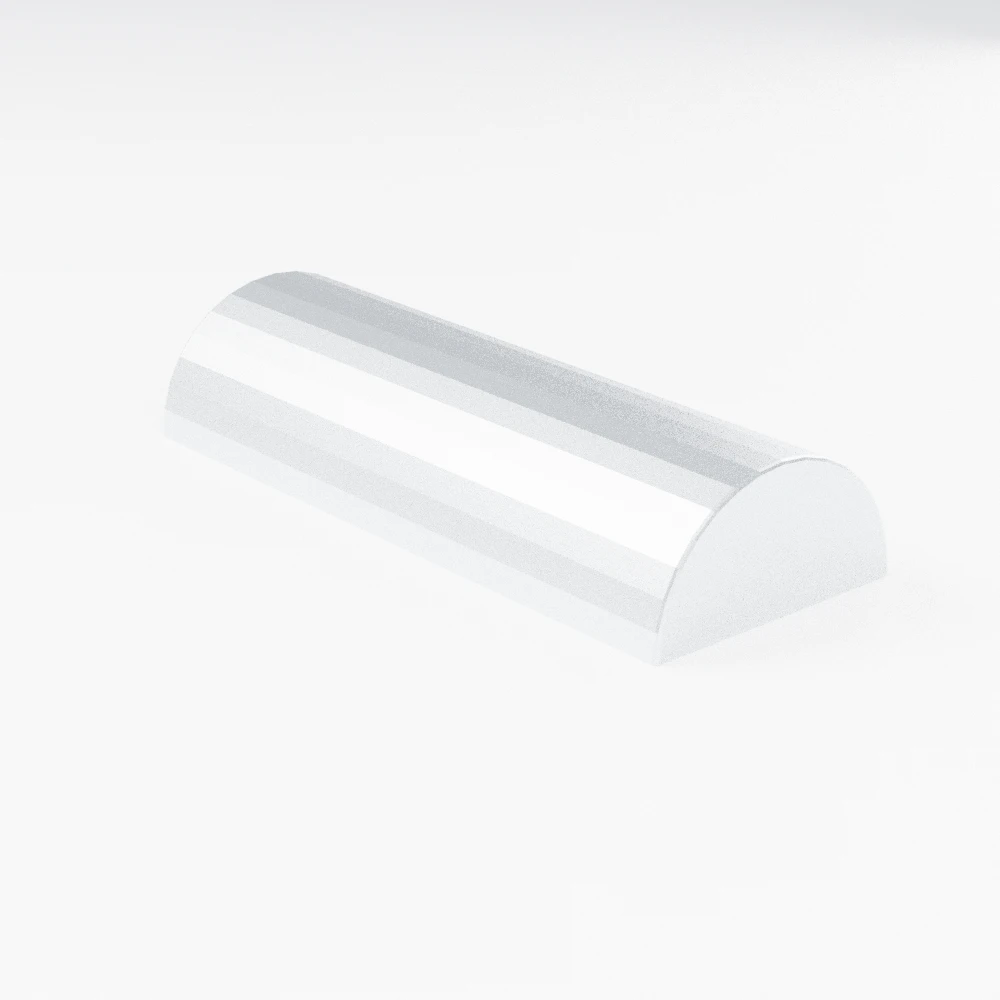
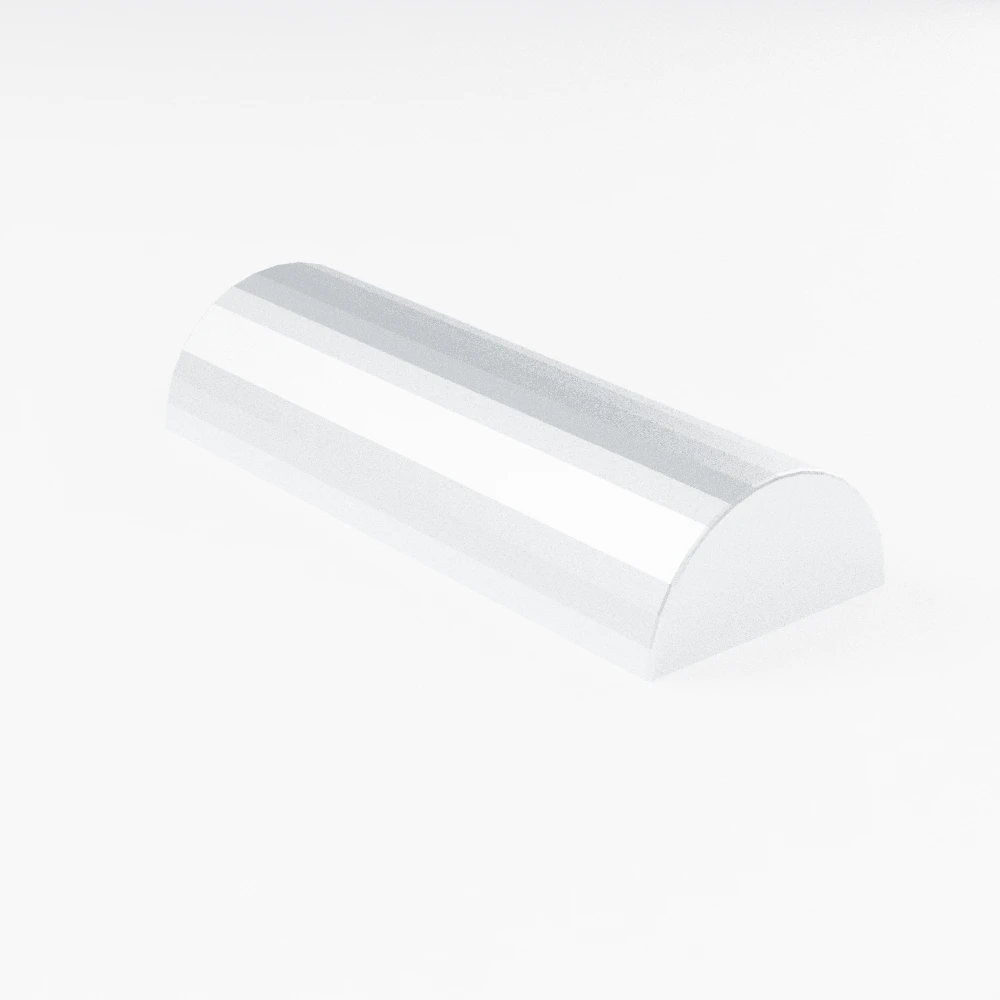
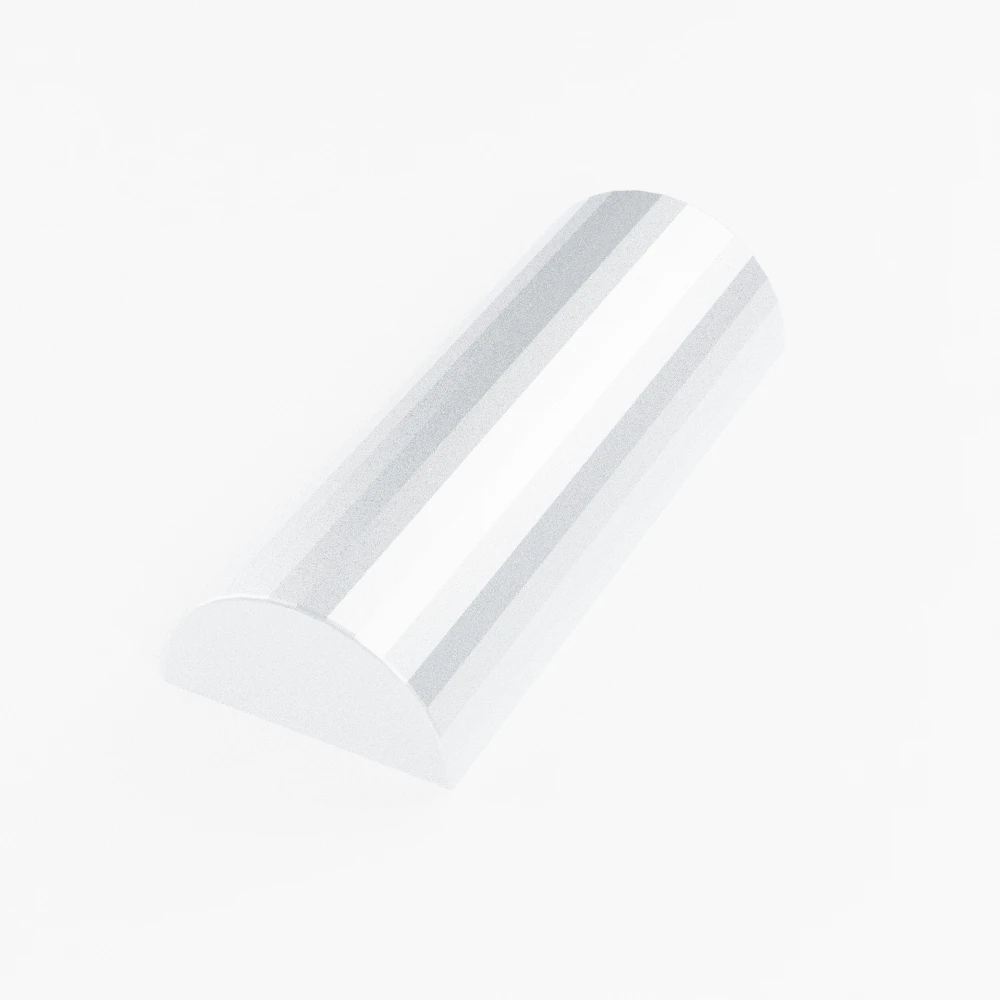
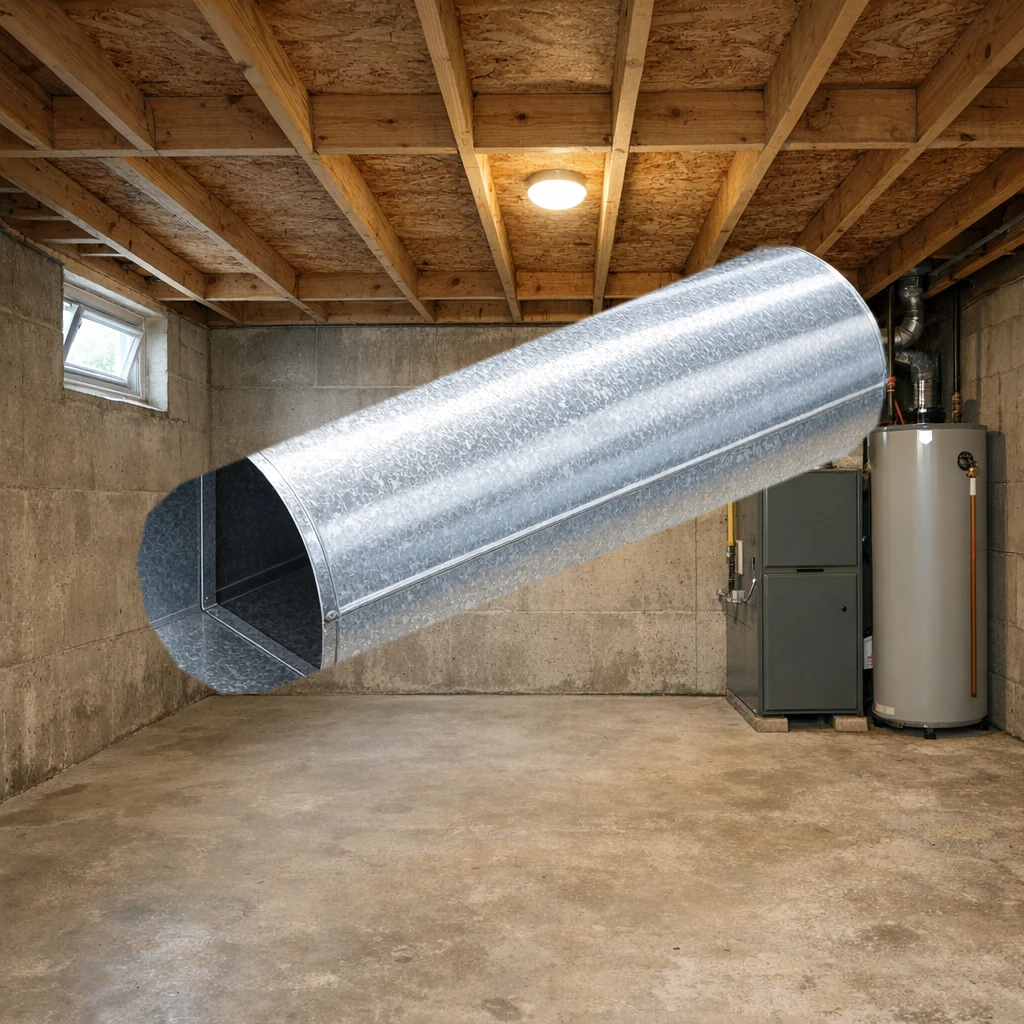
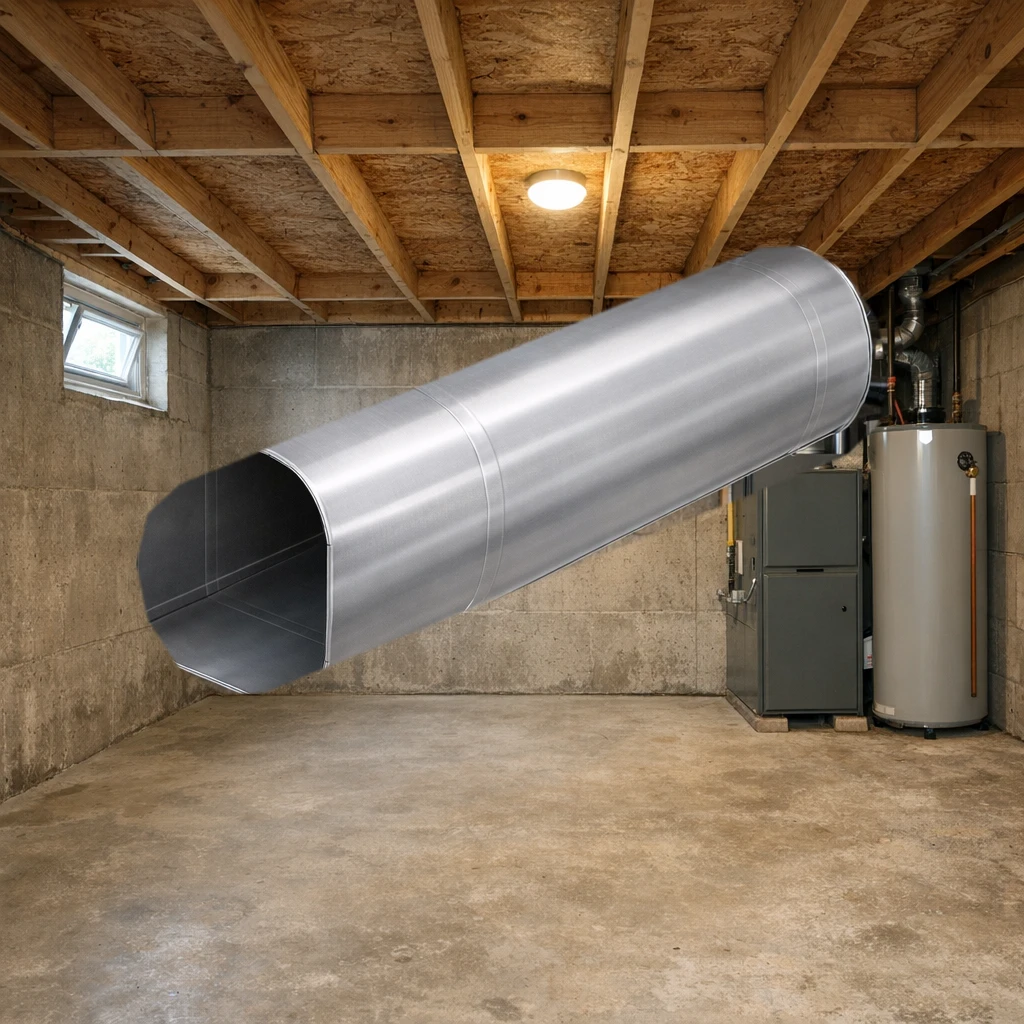
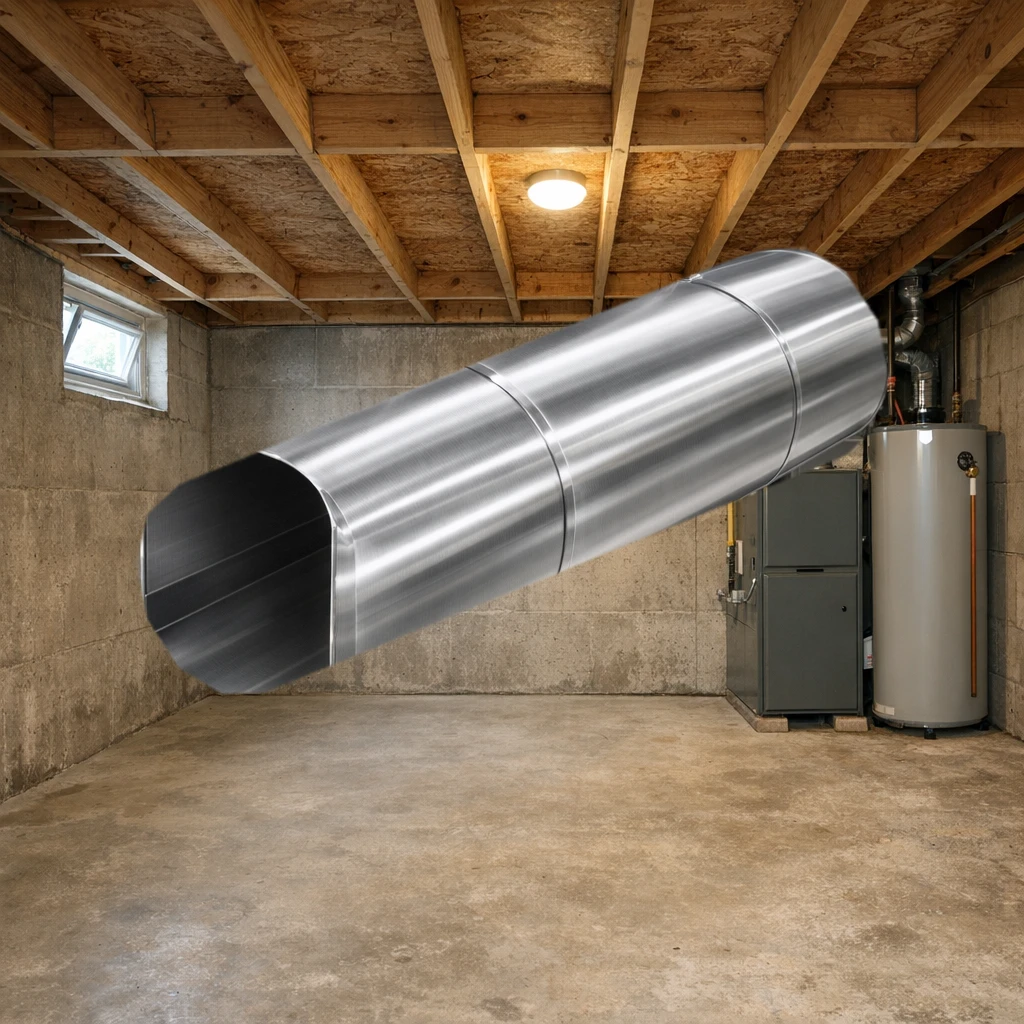
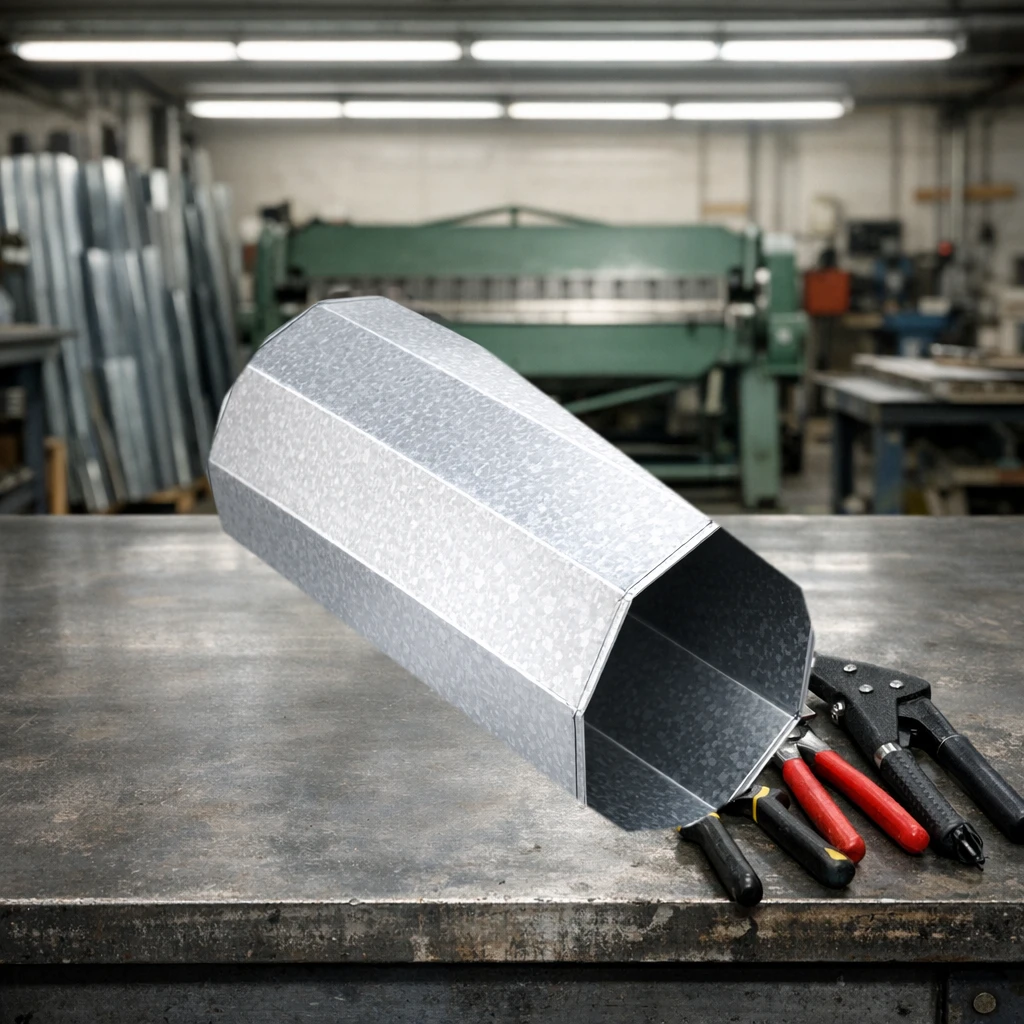
Specifications
- Diameter: 2" to 48"
- Length: 4" to 120" (10 ft)
- Materials: Galvanized Steel, Aluminum, Stainless Steel
- Gauges: 26, 24, 22, 20
- Connections: Raw, Slip, Drive, TDC, Flanged
Ships in 1 business day. Every fitting is cut, formed and inspected in our Pittsburgh shop and leaves the next business day — not the one to three weeks most custom shops quote.
Popular Round Duct Sizes & Prices
Slip joint, snap-lock seam, gauge set by the diameter. Every row is its own orderable page; the full list of 300 sizes adds aluminum, stainless and 12", 24", 36" and 60" lengths for each diameter.
| Diameter | Length | Material | Gauge | Price | Order |
|---|---|---|---|---|---|
| 4" | 48" | Galvanized | 26 ga | $68.70 | Order this size |
| 5" | 48" | Galvanized | 26 ga | $68.70 | Order this size |
| 6" | 48" | Galvanized | 26 ga | $68.70 | Order this size |
| 7" | 48" | Galvanized | 26 ga | $68.70 | Order this size |
| 8" | 48" | Galvanized | 26 ga | $68.70 | Order this size |
| 9" | 48" | Galvanized | 26 ga | $68.70 | Order this size |
| 10" | 48" | Galvanized | 24 ga | $73.25 | Order this size |
| 12" | 48" | Galvanized | 24 ga | $73.25 | Order this size |
| 14" | 48" | Galvanized | 24 ga | $73.25 | Order this size |
| 16" | 48" | Galvanized | 24 ga | $73.25 | Order this size |
| 18" | 48" | Galvanized | 22 ga | $79.75 | Order this size |
| 20" | 48" | Galvanized | 22 ga | $79.75 | Order this size |
| 24" | 48" | Galvanized | 22 ga | $79.75 | Order this size |
| 30" | 48" | Galvanized | 20 ga | $89.50 | Order this size |
| 6" | 60" | Galvanized | 26 ga | $82.30 | Order this size |
| 8" | 60" | Galvanized | 26 ga | $82.30 | Order this size |
| 10" | 60" | Galvanized | 24 ga | $87.98 | Order this size |
| 12" | 60" | Galvanized | 24 ga | $87.98 | Order this size |
| 6" | 24" | Galvanized | 26 ga | $52.22 | Order this size |
| 8" | 24" | Galvanized | 26 ga | $52.22 | Order this size |
| 8" | 48" | Aluminum | 26 ga | $100.87 | Order this size |
| 8" | 48" | Stainless | 26 ga | $133.05 | Order this size |
| 12" | 48" | Aluminum | 24 ga | $112.25 | Order this size |
| 12" | 48" | Stainless | 24 ga | $151.25 | Order this size |
Custom Round Duct Pipe: The Complete Guide
Round duct is the most efficient shape there is for moving air: for a given amount of sheet metal it carries the most air, leaks the least and loses the least pressure per foot. That is why long commercial runs are round, why residential branch runs are round, and why the supply house stocks it in every even diameter from 4" to 12" and then stops. The 5", 7" and 9" pipe a balanced design calls for, the 15" or 17" trunk that a friction chart lands on, the 26" or 32" return, and every diameter in 24, 22 or 20 gauge or in aluminum or stainless, is a phone call and a wait. Every round section on this page is rolled to the diameter and length you type into the designer, in the gauge and material you choose, and priced as you type.
What follows is the guidance we give on the phone: what round pipe is and how it is made, where it is used, how to size it from airflow by velocity and by friction, which gauge and material to specify, how the ends join, and how to measure for it. If you already know your numbers, the designer prices them instantly and the popular-sizes table links to a page for each common size.
What round duct pipe is and how it is made
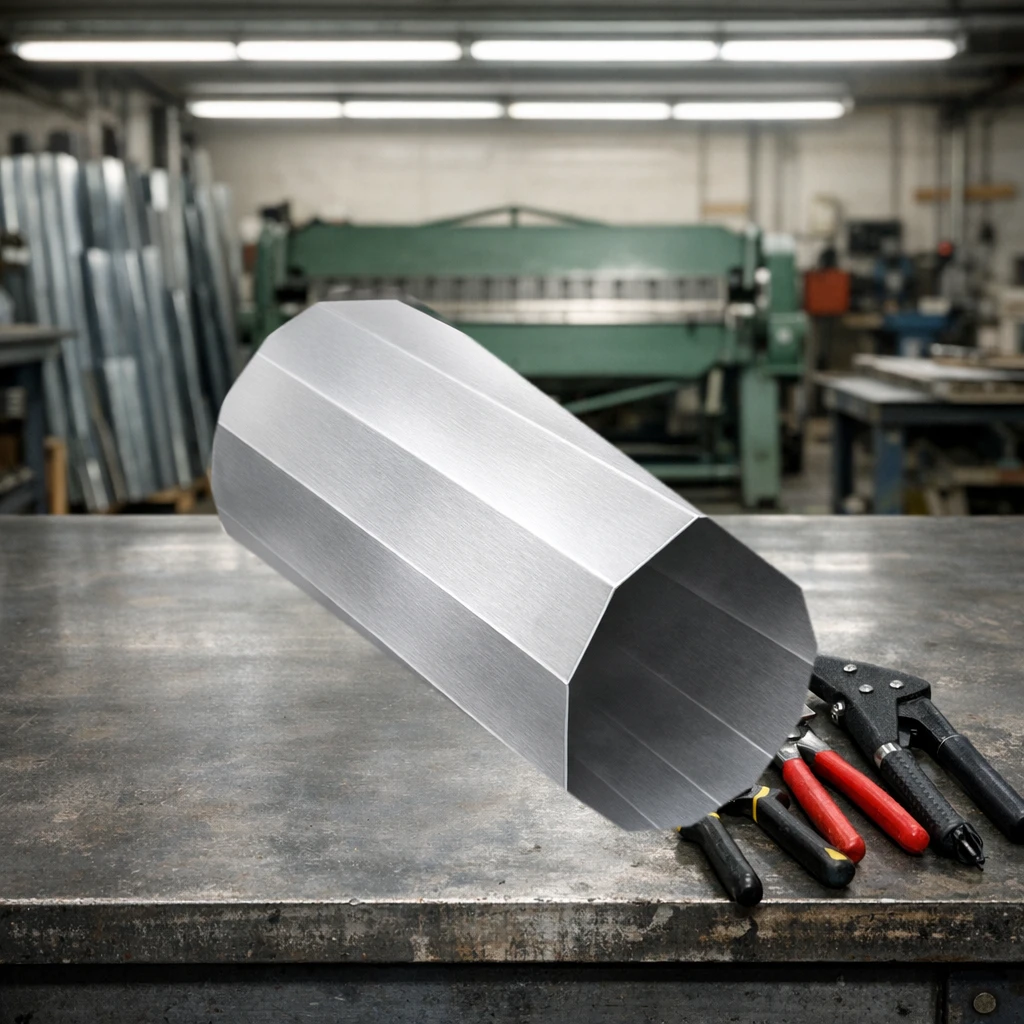
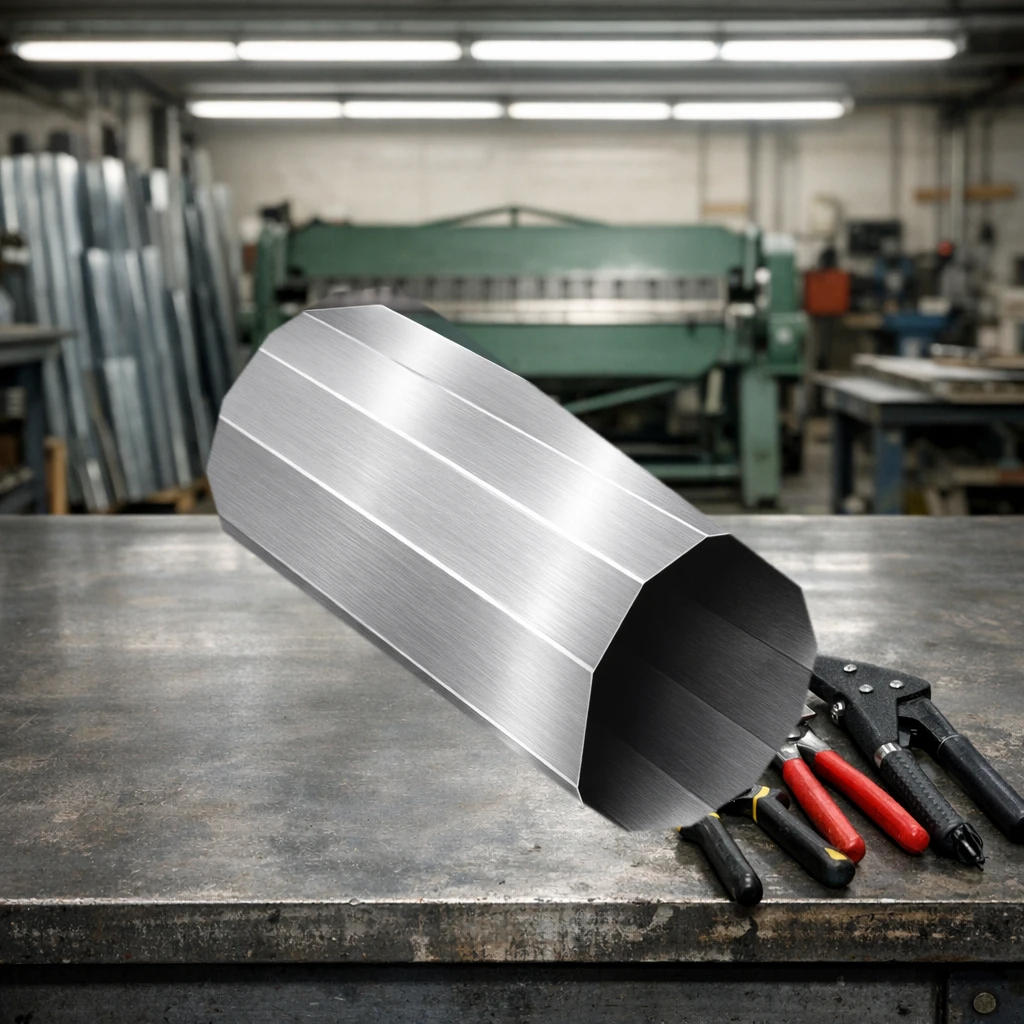
A round duct section is a cylinder of sheet metal with one seam running along its length. Ours is snap-lock pipe: the flat sheet is cut to the developed length of the circumference, one edge is formed into a hook and the other into a matching pocket, the sheet is rolled to the diameter, and the seam snaps shut. It needs no rivets, screws or solder, and because the sheet is rolled to the diameter in the shop rather than sprung round on site, the pipe arrives circular, holds its shape, and mates with fittings without forcing. One end is crimped so it slips inside the plain end of the next section or fitting; a raw or flanged end is available where the joint calls for it.
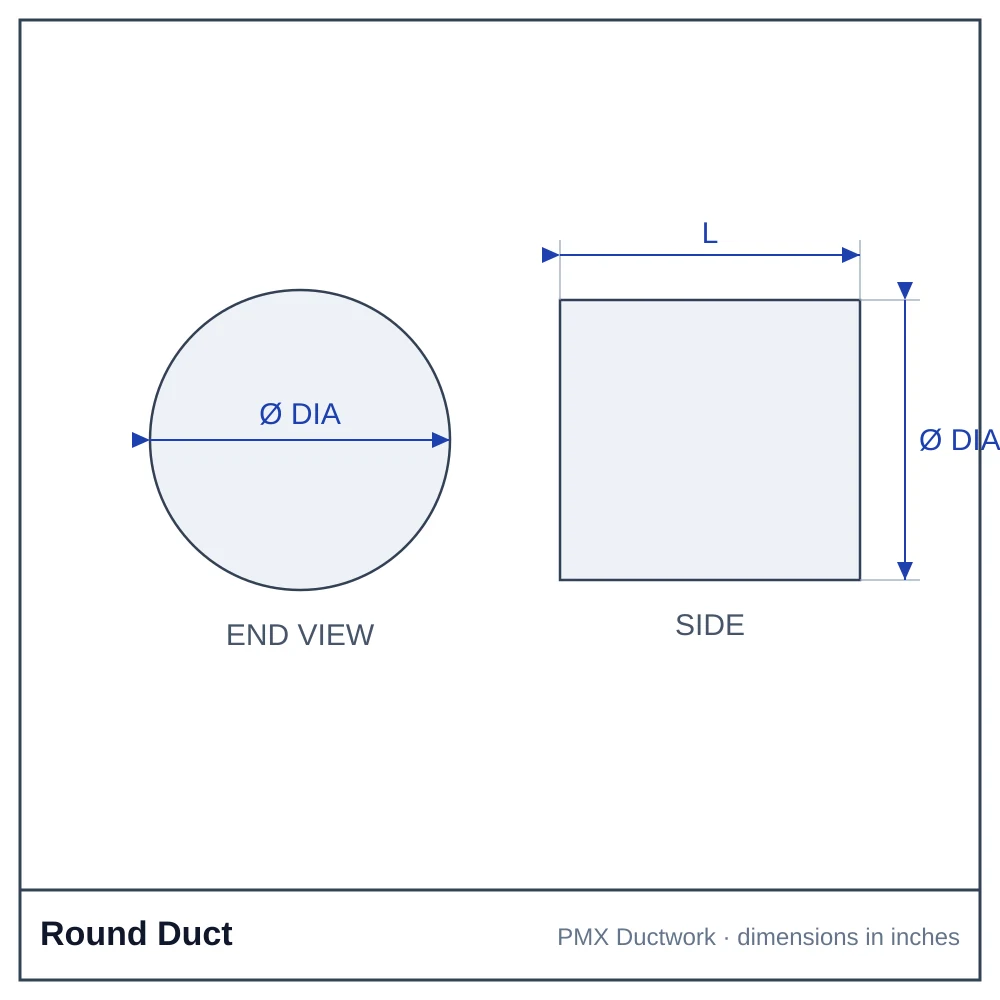
The two numbers that define the section are the diameter and the length. Diameter is the nominal pipe size, the same number written on a plan and the same number a round fitting is sized to; a 8" section fits an 8" elbow, an 8" takeoff collar and 8" flex duct. Length is the length of the sheet; the crimp is formed within it, so a 48" section makes a 48" run once it is joined. Nothing is stock, so a 7" pipe costs what a 6" or 8" costs for the same amount of metal, and a 27" section costs the same as a 24" or a 30".
Where round duct is used
- Residential supply branches. 5", 6", 7" and 8" runs from the trunk to each register, the single most common duct in a house. Rigid pipe beats flex duct on every branch where it fits: lower friction, no sag, no kinks and no crushed radius at the boot.
- Round supply and return trunks. Where the ceiling or basement has the height, a 14" to 20" round trunk with round tees and reducers replaces a rectangular trunk with less metal and fewer joints.
- Commercial mains. Exposed round duct in retail, restaurant, gym and office ceilings, both because it is efficient and because it looks finished.
- Exhaust. Bath fans, range hoods, dryer runs in rigid pipe, and commercial kitchen, laboratory and process exhaust in heavier gauge or stainless.
- Dust collection and material handling. Round pipe is the only shape that works when the air carries chips, dust or fibers; rectangular corners collect.
- Make-up air and ventilation. ERV and HRV runs, make-up air to a kitchen or a boiler room, and fresh air intakes.
Sizing round duct from CFM
Round pipe is sized by two limits, and the right size is whichever comes out larger. The velocity limit keeps the pipe quiet: residential branches are usually held to 600 to 700 fpm, trunks to about 900, returns lower, and commercial low-pressure mains to about 1,500. The friction limit keeps the fan within its static pressure budget: residential design normally uses a friction rate between 0.06 and 0.10 inches of water per 100 feet, commercial low-pressure about 0.10. Sizing by velocity is arithmetic. The free area the pipe needs, in square inches, is CFM divided by velocity times 144, and the diameter is
D = 2 × √( A ÷ π ) where A = CFM ÷ velocity × 144
Sizing by friction is the ductulator calculation: for a given CFM and friction rate, the friction chart gives one diameter, and a larger pipe runs at a lower friction rate. The calculator at the top of the page does both, rounds up to the next diameter we publish, and shows the velocity and friction the pipe will actually run at. Some reference values at a friction rate of 0.10 in. w.c. per 100 ft:
| Airflow | Diameter at 0.10 | Velocity in that pipe | Typical use |
|---|---|---|---|
| 75 CFM | 6" | 380 fpm | Small bedroom branch, bath fan |
| 100 CFM | 6" | 510 fpm | Standard bedroom branch |
| 150 CFM | 7" | 560 fpm | Large room branch |
| 200 CFM | 8" | 570 fpm | Living area branch, two registers |
| 300 CFM | 9" | 680 fpm | Small return, kitchen hood |
| 400 CFM | 10" | 730 fpm | One-ton supply trunk |
| 600 CFM | 12" | 760 fpm | 1.5-ton supply trunk |
| 800 CFM | 14" | 750 fpm | Two-ton supply trunk |
| 1,200 CFM | 16" | 860 fpm | Three-ton supply trunk |
| 1,600 CFM | 18" | 900 fpm | Four-ton supply trunk |
| 2,000 CFM | 20" | 920 fpm | Five-ton supply trunk |
Notice that at residential friction rates every pipe in that table runs below 950 fpm, so on a normal house the friction rate governs and the velocity limit never comes into play. It is the other way round on short, high-flow runs such as a hood exhaust or a dust collection drop, where the velocity is chosen on purpose (2,000 fpm or more to keep particles moving) and friction is accepted. Enter the velocity you actually want and the calculator sorts out which limit wins.
Sizing a trunk that reduces after each branch
A round supply trunk is not one diameter from the air handler to the last register. It carries the whole system airflow at the start and only the last branch's airflow at the end, and if it stays the same size the whole way the air slows down, the pressure at the far registers rises, and the near rooms starve while the far rooms roar. The equal-friction method handles this by sizing each segment of the trunk for the airflow that remains after each takeoff, at the same friction rate throughout. A 1,200 CFM trunk might start at 16", drop to 14" after the first two branches take 400 CFM, to 12" after the next 200, and finish at 10" or 9". Each drop is a round reducer between two straight sections, and the sections between them are the pipe on this page. Run the calculator once per segment with the remaining CFM, keep the friction rate the same each time, and the trunk comes out balanced without dampers doing the work.
The same arithmetic converts an existing rectangular run to round. Find the equivalent diameter of the rectangle you are replacing, which is the round size with the same friction per foot at the same flow, not the same free area, and it is always a little smaller than the equal-area size. A 14" x 8" rectangle is equivalent to about a 12" round; a 20" x 8" to about a 14"; a 24" x 12" to about an 18". The rectangular duct page has the formula and a calculator that works it in the other direction.
Round versus rectangular
A circle encloses the most area for the least perimeter, so a round pipe uses the least sheet metal, has the least wall for air to rub against and the least seam to leak. A 12" round carries the same air at the same friction as about a 14" x 8" rectangle, using roughly 15 percent less metal and with one seam instead of a seam plus four corners. Round pipe also holds pressure without oil-canning, which is why the same gauge goes further in round than in rectangular. The reasons to use rectangular duct instead are all about space: a rectangle fits between joists and studs, above a shallow ceiling, tight to a beam or a wall, and carries a wide-and-shallow trunk where a round of the same capacity would hang below the ceiling. The usual residential compromise is a rectangular trunk in the joist space with round branches off it through square-to-round takeoffs, and that is exactly the layout the fittings on this site are built for.
Gauge
Sheet metal gauge for round duct is set by the diameter, because a larger circle has a flatter wall and flexes more under pressure. The published size pages on this site default to 26 gauge for diameters up to 9", 24 gauge to 16", 22 gauge to 26", and 20 gauge from 28" to 36". Those defaults suit residential and light-commercial supply and return duct in the two-inch-water-column class. Because the curve carries the load, round pipe of a given gauge is stiffer than rectangular duct of the same gauge and long side, so the defaults are conservative. Step up one gauge for kitchen grease exhaust, dust collection, outdoor or rooftop runs, exposed duct that will be leaned on, and any medium-pressure system. Every size page and the designer let you change the gauge, and the price updates on the spot.
Galvanized, aluminum or stainless
Galvanized steel is the standard for heating and cooling duct and is what most round pipe is made of. It is the least expensive, it takes mastic and foil tape well, and it matches the rest of the system. Aluminum weighs about a third as much for the same gauge number, does not rust, and is specified for rooftop duct, pool and spa air handlers, coastal installations, some laboratory exhaust, and any run that has to be lifted into place by one person. Stainless steel is the material for commercial kitchen grease exhaust, chemical and process exhaust, washdown environments, and any exposed pipe that must stay bright. Each material is priced live; the popular-sizes table shows all three for two common diameters so you can see the difference before you choose.
How the ends connect
Round duct joins male into female: the crimped end of one section slides inside the plain end of the next, or inside the collar of a fitting. Install the crimped end pointing in the direction of airflow, so that air leaving the joint pushes away from the seam rather than into it. Fasten every joint with three sheet metal screws spaced around the pipe, and seal it with mastic or UL 181 foil tape; screws alone do not make a joint airtight and on a supply run a few percent of leakage at every joint is the difference between a room that heats and one that does not. Where the run connects to equipment or a wall sleeve, a raw end for a field-made joint or a flanged end for bolting is available in the designer. For duct that will be taken apart, or on medium-pressure commercial work, a slip joint with a drawband or a flanged joint with a gasket is the usual choice.
Length, hangers and seams
The designer builds any length from 4" to 120". The published sizes are 12", 24", 36", 48" and 60" because those cover almost every run when combined; a short section is how you make up an odd distance between two fittings without cutting pipe in the field and losing the crimp. Hang round duct at least every 10 feet with strap or ring hangers, more often for large or heavy-gauge pipe, and put a hanger within two feet of every joint so the joint carries no load. Orient the longitudinal seam up or to the side, never at the bottom where condensation collects in a cooling run. Insulate supply pipe in unconditioned space and seal every seam and joint; the snap-lock seam is tight but not airtight.
How to measure the pipe you need
- Diameter: match the nominal size of the fittings and pipe you are joining to. If you are measuring existing pipe, measure the inside diameter of the plain end; that is the nominal size. If you are sizing a new run, use the calculator above or your Manual D or equal-friction design.
- Length: measure the gap between the two fittings the section will fill. The crimp slides about 1.5" into the next fitting, so a 50" gap wants a 48" section plus a little. For a straight run, divide the length into sections that land a joint near each hanger.
- Ends: crimped-and-plain for pipe-to-pipe and pipe-to-fitting; raw where you are making a field connection; flanged for equipment.
- Gauge and material: match existing pipe unless it was undersized; otherwise take the defaults, which are set by the diameter.
Round pipe versus flex duct
Flexible duct is faster to install and easier to snake through framing, and that is where its advantages end. Its inner liner is a corrugated helix that adds friction, it sags between supports, it kinks at every bend and it gets crushed at the boot. A 6" flex run pulled reasonably taut has roughly the friction of a 5" rigid pipe, and a poorly installed one is worse. Rigid round pipe with proper elbows holds its full diameter for its whole length, does not sag, does not compress, and can be sealed and cleaned. Where a branch has to be flex for the last few feet at a register, keep the rigid pipe as far as possible and use the shortest, straightest flex you can.
Round duct versus a reducer, an elbow, or a square-to-round
A straight round section has the same diameter from end to end. A reducer steps a round run down to a smaller diameter, as a trunk does after each branch. An elbow changes direction. A square-to-round converts a rectangular opening to round pipe. A run of round duct is straight sections with those fittings between them, and the designer builds all of them to the same nominal diameter so they fit together without shims or tape.
Ordering and price
Set the diameter and length in the designer, choose material, gauge and ends, and the price shown is the price you pay; there is no quote step for standard configurations. Each section is rolled to order in our Pittsburgh shop from full sheets, so an odd diameter costs the same as a common one of the same amount of metal, and quantity does not change the unit price the way it does for stock pipe. Add sections to the cart with the rest of the job, or order any of the 300 published sizes from its own page. For diameters beyond 48", spiral pipe, lined or double-wall duct, or a takeoff from a drawing, call 412.725.2744 or email sales@pmxductwork.com with the dimensions.
Read more
- Rectangular versus round duct: when the shape decision goes each way.
- Duct velocity guide and CFM duct sizing calculator: the velocity and friction methods in more depth.
- Flex duct versus sheet metal and exhaust fan duct sizing.
- Every published round duct size with its price.
Frequently Asked Questions
What diameter round duct do I need for a given CFM?
Size it by velocity and by friction and take the larger. By velocity, the free area in square inches is CFM ÷ velocity in fpm × 144, and the diameter is 2 × √(area ÷ π); a 6" pipe carries about 100 CFM at 500 fpm, an 8" about 175. By friction, pick a friction rate, usually 0.08 to 0.10 in. w.c. per 100 ft for residential, and read the diameter off the friction chart. The calculator on this page does both and rounds up to the next diameter we publish.
What gauge should round duct be?
Gauge follows the diameter. The published size pages on this site default to 26 gauge up to 9", 24 gauge to 16", 22 gauge to 26" and 20 gauge from 28" to 36", which suits low-pressure residential and light commercial supply and return. Round duct is stiffer than rectangular of the same gauge because the curve carries the load, so those defaults are conservative. Go one gauge heavier for kitchen exhaust, dust collection, outdoor runs or exposed duct.
How long can a round duct section be?
The designer builds any length from 4" to 120" in quarter-inch steps. The published size pages use 12", 24", 36", 48" and 60" lengths. A short section is the usual way to make up an odd distance between two fittings without cutting pipe in the field.
What is the difference between snap-lock and spiral round duct?
Snap-lock pipe is rolled from a flat sheet and closed with a longitudinal seam that snaps shut; it ships flat or round, is easy to cut and crimp in the field and is the standard residential branch pipe. Spiral pipe is wound from a strip with a helical lock seam, is stiffer and better for long commercial runs but cannot be shortened as neatly. Every round section on this page is snap-lock, rolled to your diameter and closed in the shop so it arrives round and true.
Which end is crimped, and which way does the air go?
Round duct joins male into female: one end is crimped so it slides inside the plain end of the next section. Install the crimped end pointing in the direction of airflow so any air leaving the joint pushes away from the seam rather than into it. Screw each joint with three sheet metal screws and seal it with mastic or UL 181 foil tape.
Should I use round or rectangular duct?
Round carries the same air with less metal, less surface to leak, and lower friction, and is cheaper per foot, so use it wherever it fits. Rectangular wins where the duct has to live in a joist bay or a shallow ceiling space. The usual residential layout is a rectangular trunk with round branches; the usual commercial layout is round or spiral mains wherever they clear the structure.
Galvanized, aluminum or stainless for round duct?
Galvanized steel for ordinary supply and return duct. Aluminum for rooftop, coastal, pool and corrosive but non-food environments and where weight matters. Stainless steel for kitchen grease exhaust, laboratory and process exhaust, washdown areas and exposed duct that must stay bright. All three are priced live in the designer and on every size page.
Can I get a diameter that is not in your published list?
Yes. The 300 published sizes cover 3" to 36" diameters in five lengths. The designer accepts any diameter from 2" to 48" and any length from 4" to 120" in quarter-inch steps, prices it instantly, and lets you add it to the cart. Every section is rolled to order, so an odd diameter costs the same as a common one of the same amount of metal.